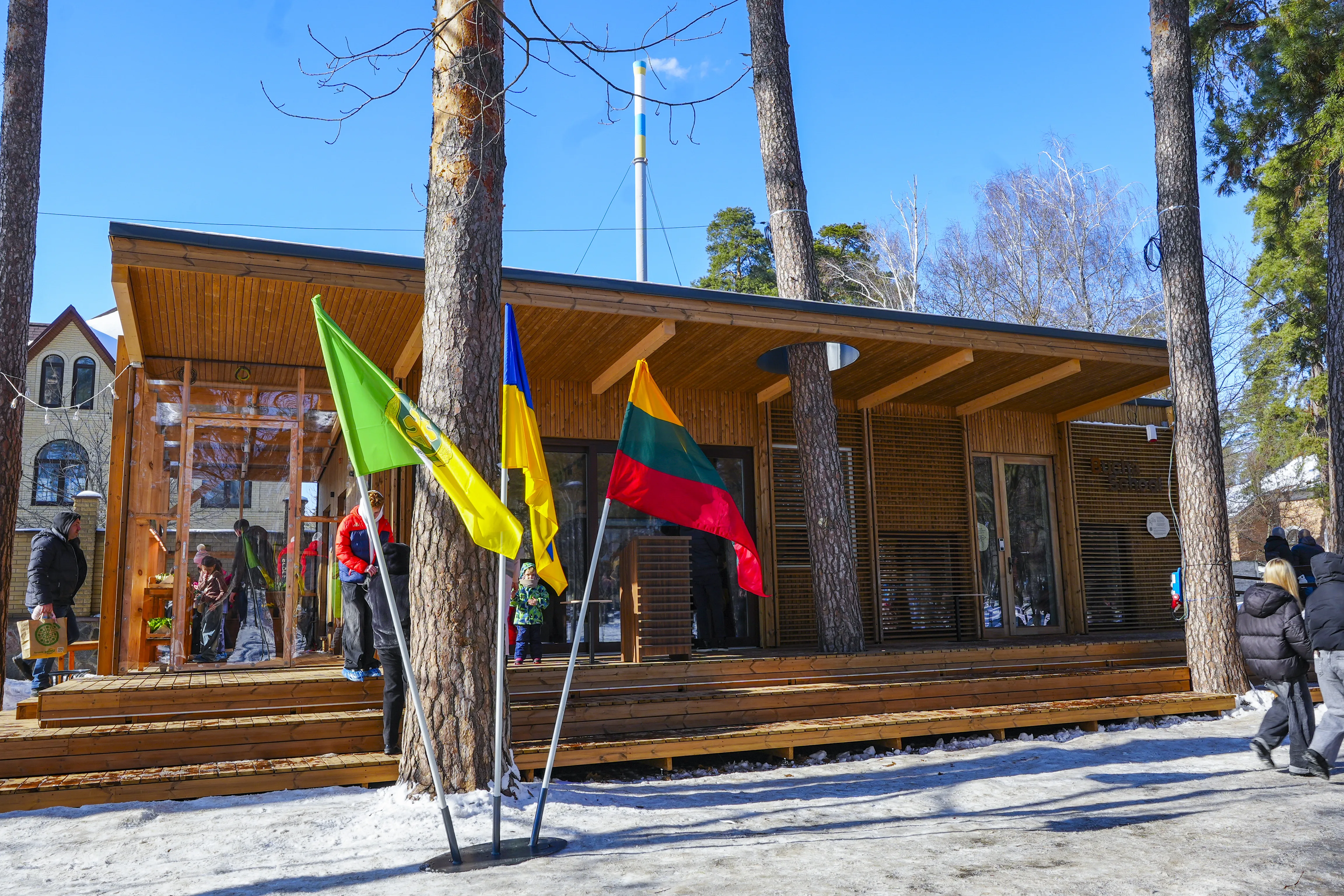
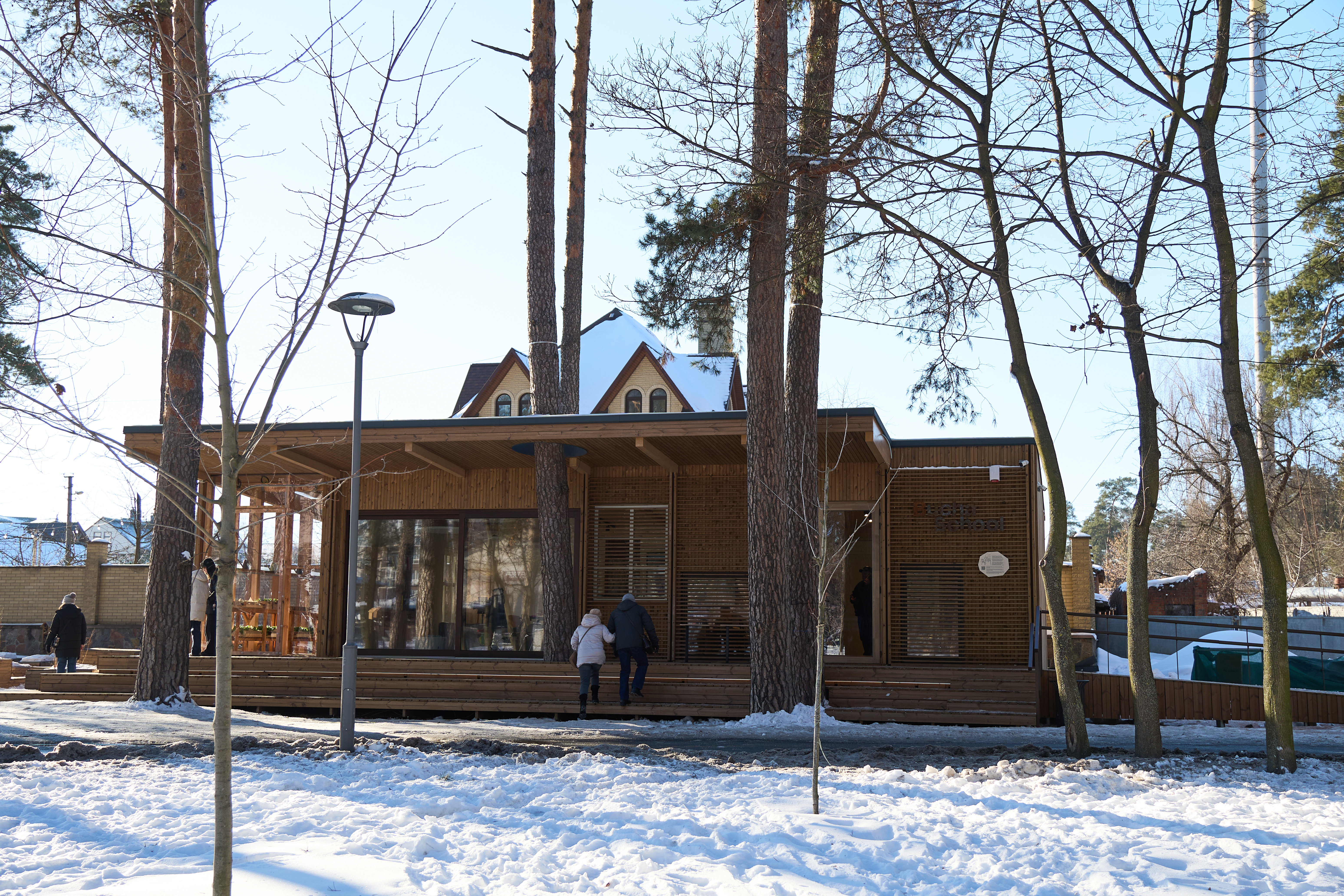
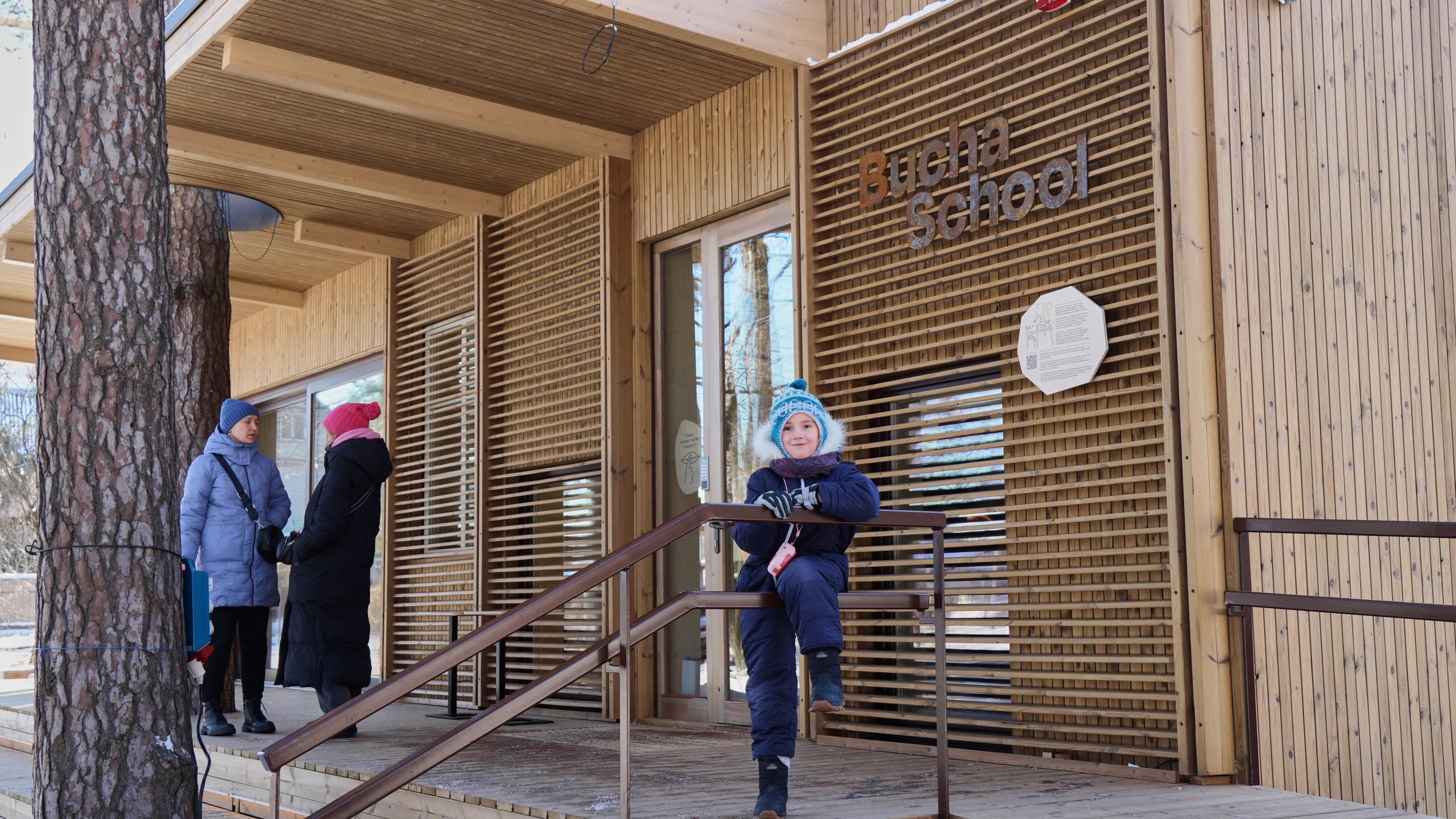
Bucha Forest Classroom is a sustainable educational space for children in Bucha, developed within the framework of the New European Bauhaus initiative.
Nestled among pine trees, the classroom was built from natural materials and created by the local community, actively involved at every stage from design and construction to its operations.
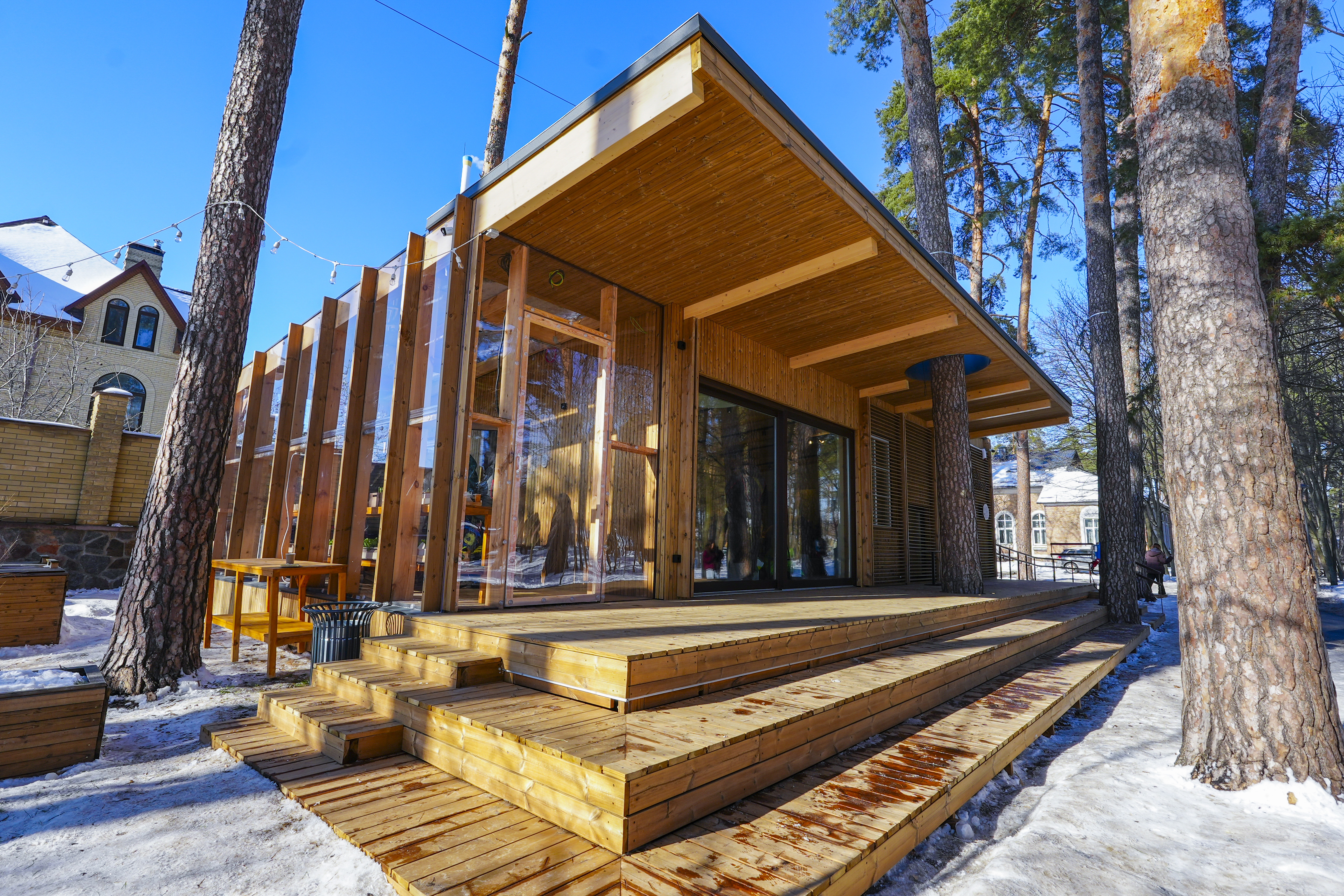
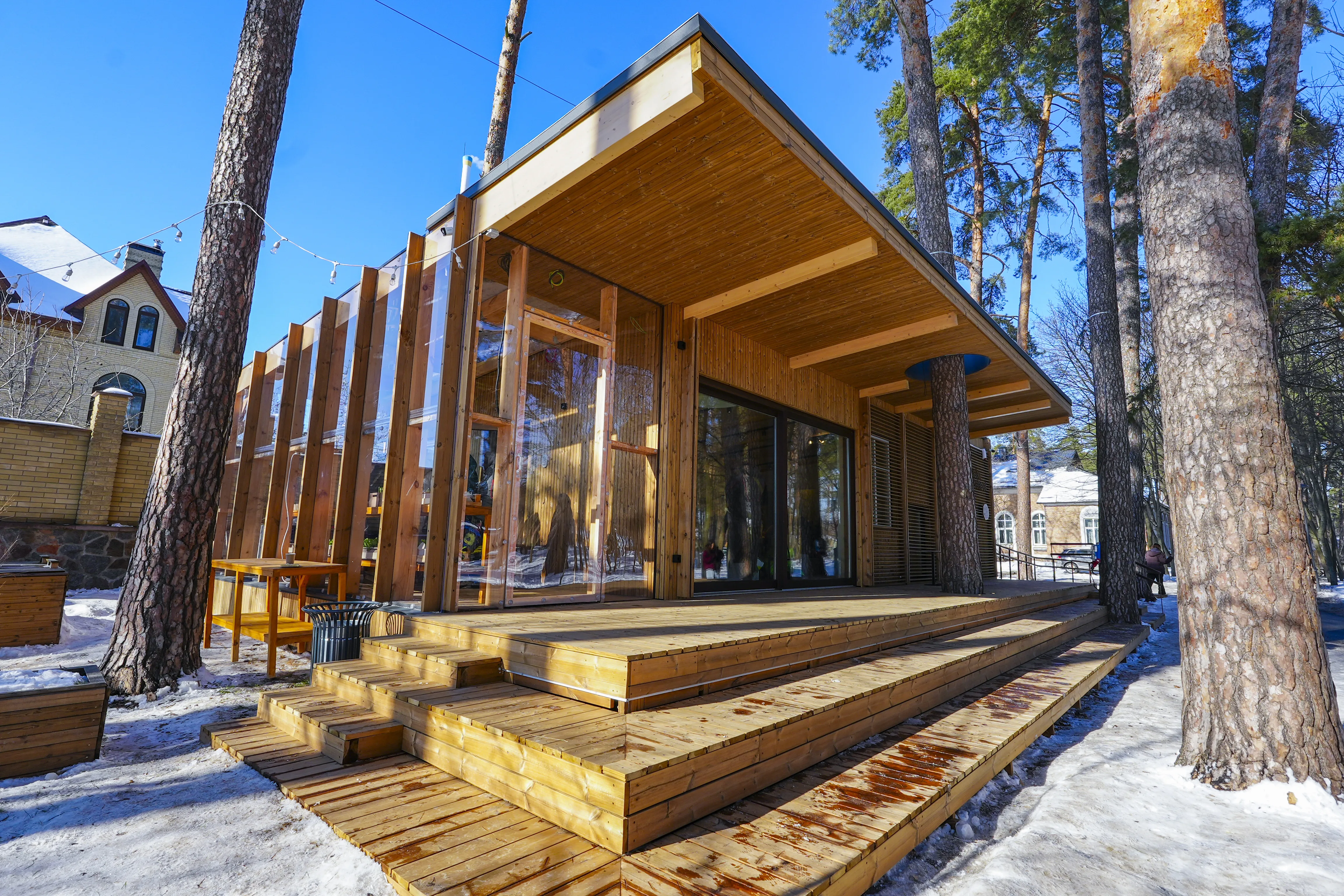

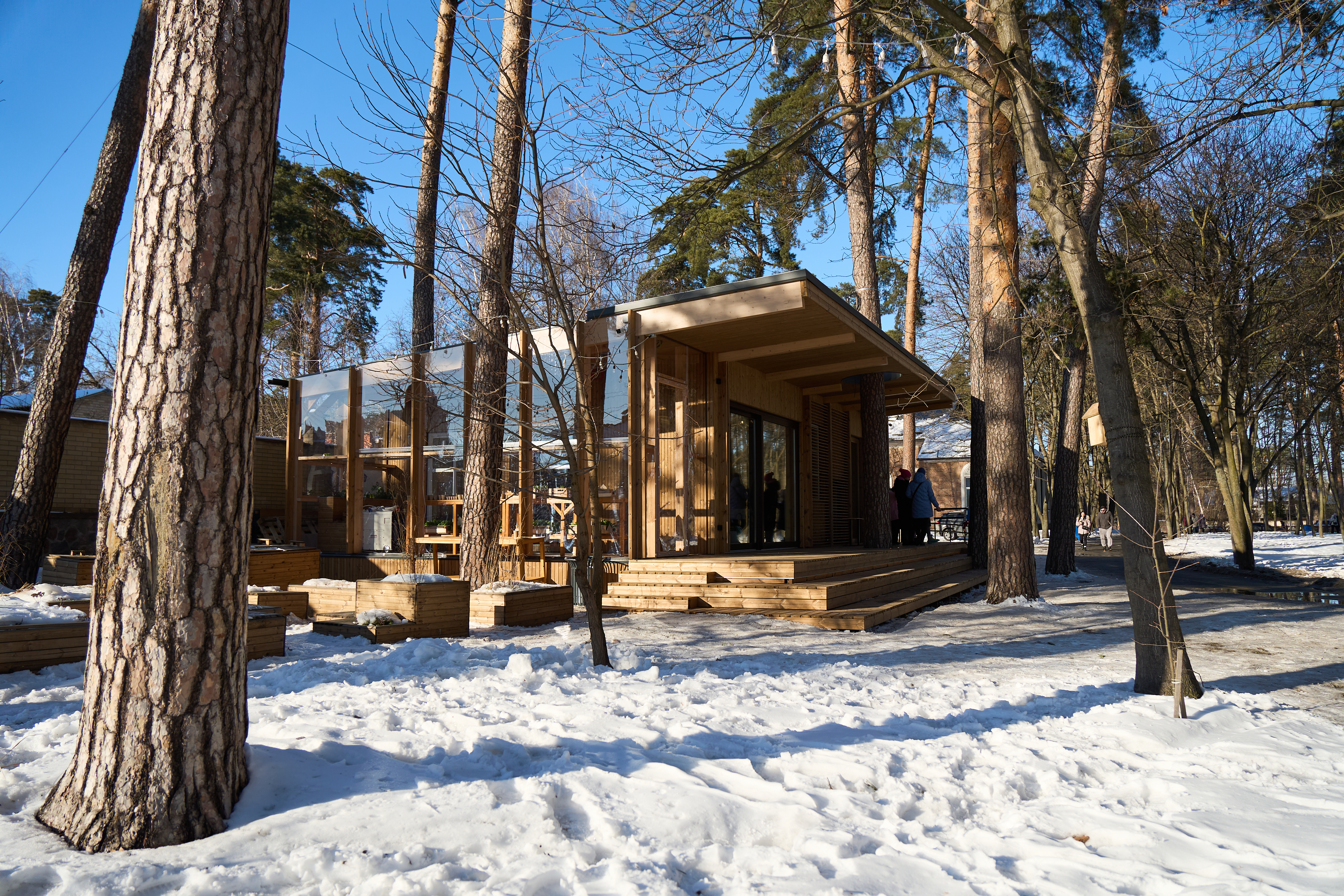
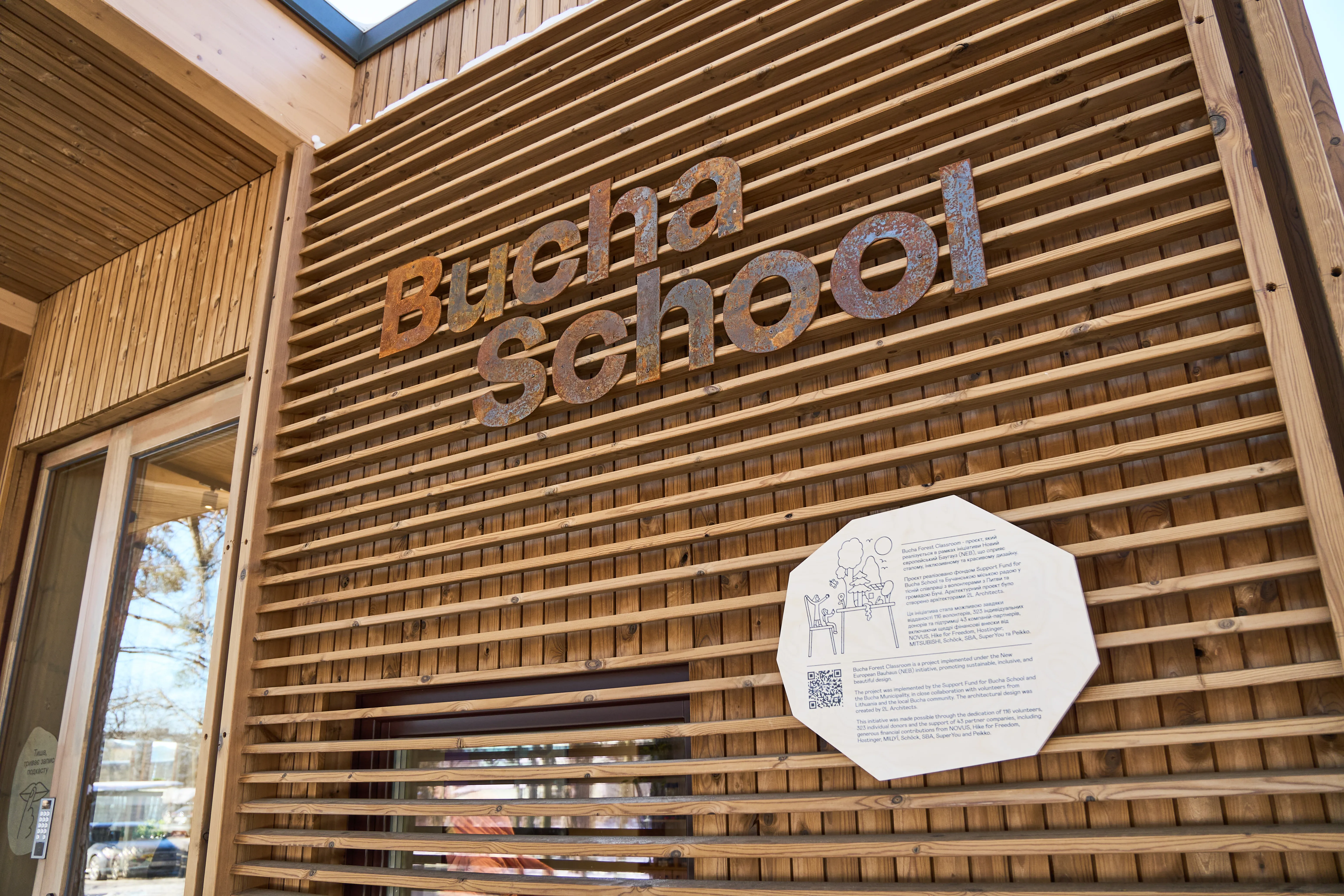
The use of thermowood cladding and wooden windows combines creativity with sustainability, allowing the exterior to age naturally over time while contributing to the project’s carbon-neutral performance. The windows and doors are fitted with Birdshades window film, featuring innovative UV markings that help protect biodiversity by reducing bird collisions.
The outdoor classroom and community hub are designed to be accessible to people of all ages and backgrounds, promoting mental well-being and social interaction through workshops and activities.

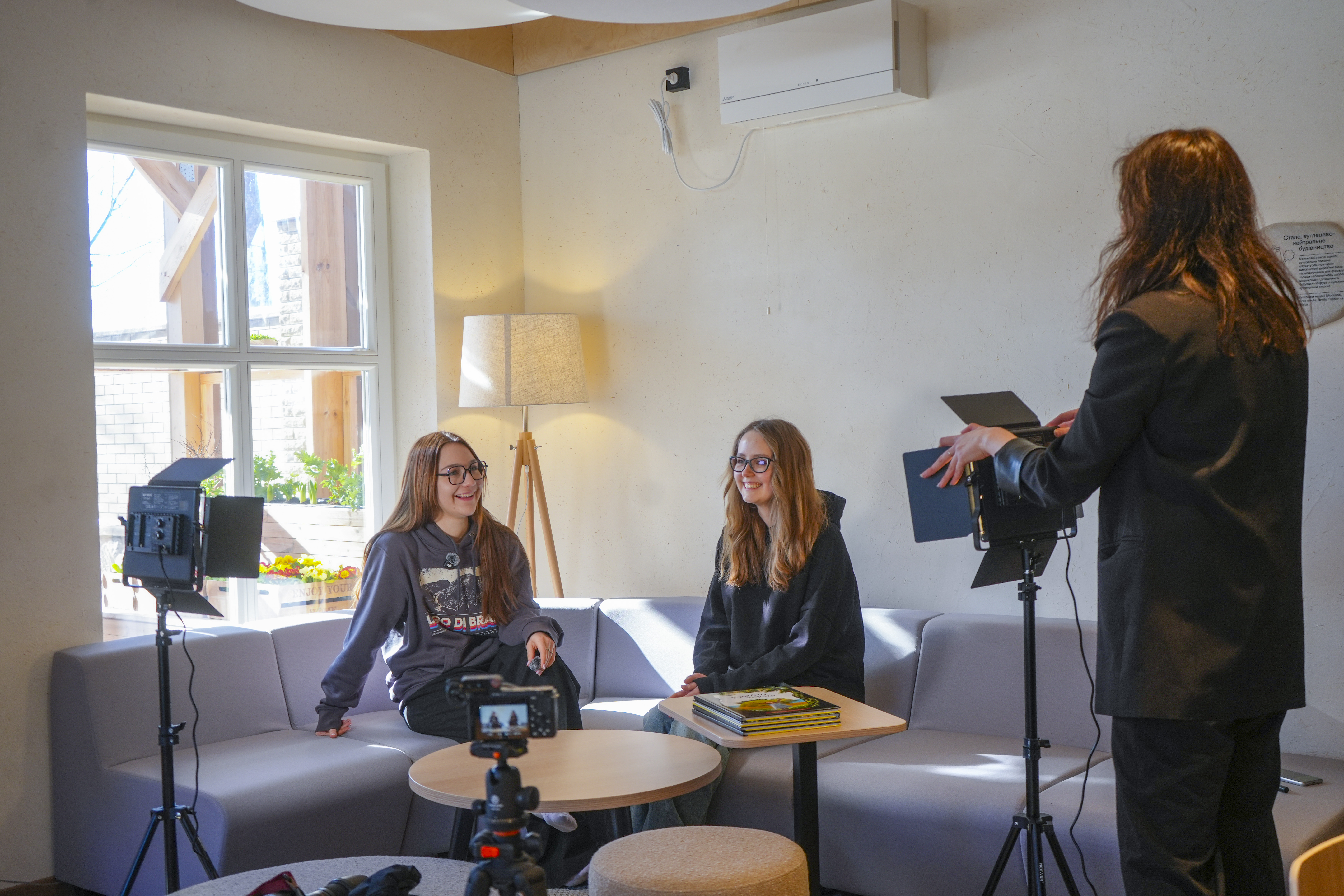
The podcast studio is a dedicated, child-friendly media space designed to empower students to create and record their own sustainability-focused podcasts and audiovisual content. Equipped with microphones, a camera, and professional lighting equipment, the studio provides a high-quality yet accessible environment where children can explore storytelling, environmental topics, and digital creativity.
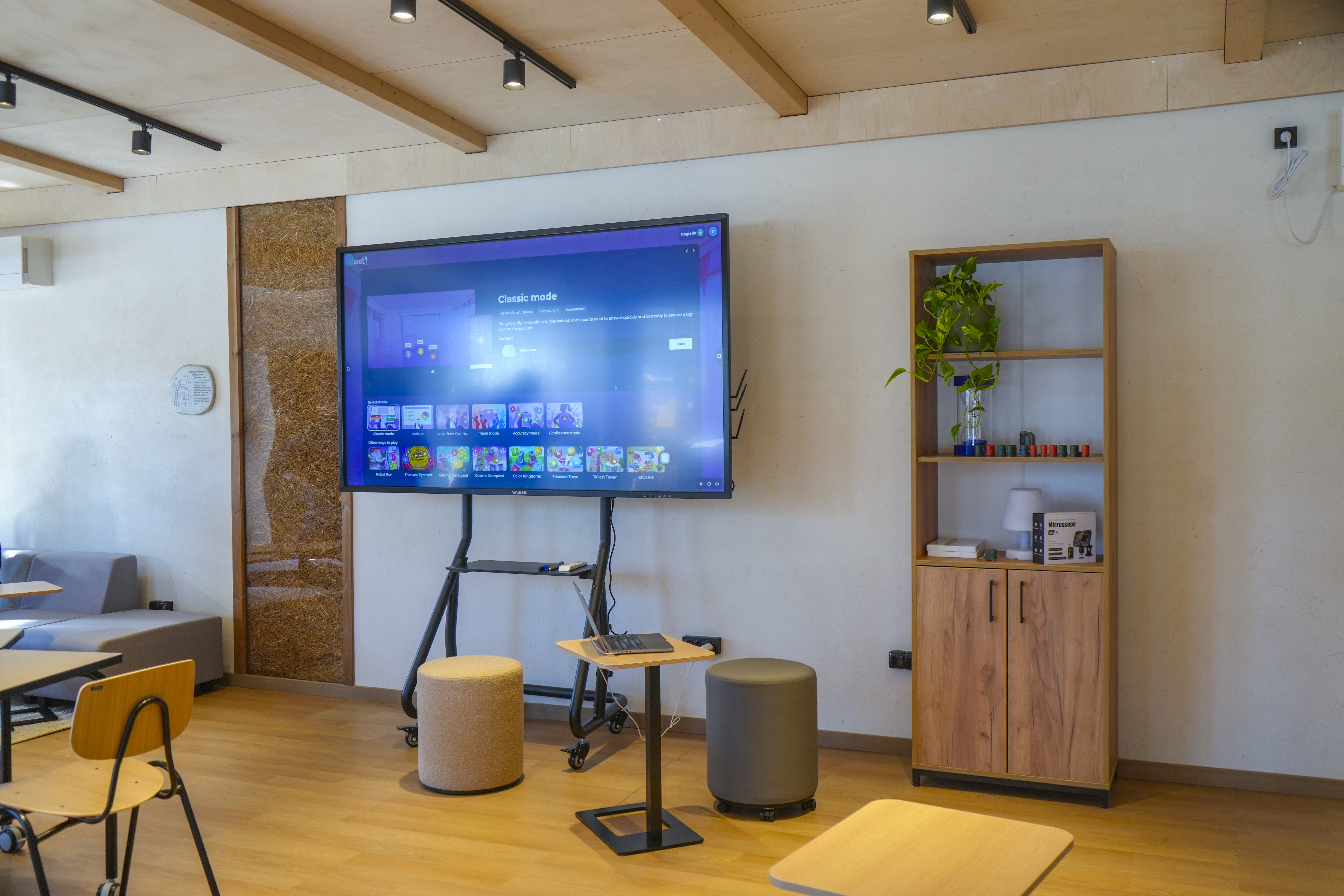
The 86-inch interactive smartboard installed in the Bucha Forest Classroom serves as a central educational tool that enhances engagement, creativity, and digital learning. Designed with modern touch technology and high-resolution display, it enables dynamic, hands-on lessons where children can interact directly with educational content, collaborate on group tasks, and explore multimedia materials in an immersive way.
The classroom is furnished with modern, flexible seating and modular elements designed to support collaboration, creativity, and comfort. Tiered seating provides a dynamic space for group discussions, presentations, and shared learning moments, while lightweight tables can be easily rearranged into multiple configurations to accommodate teamwork, workshops, or individual study.
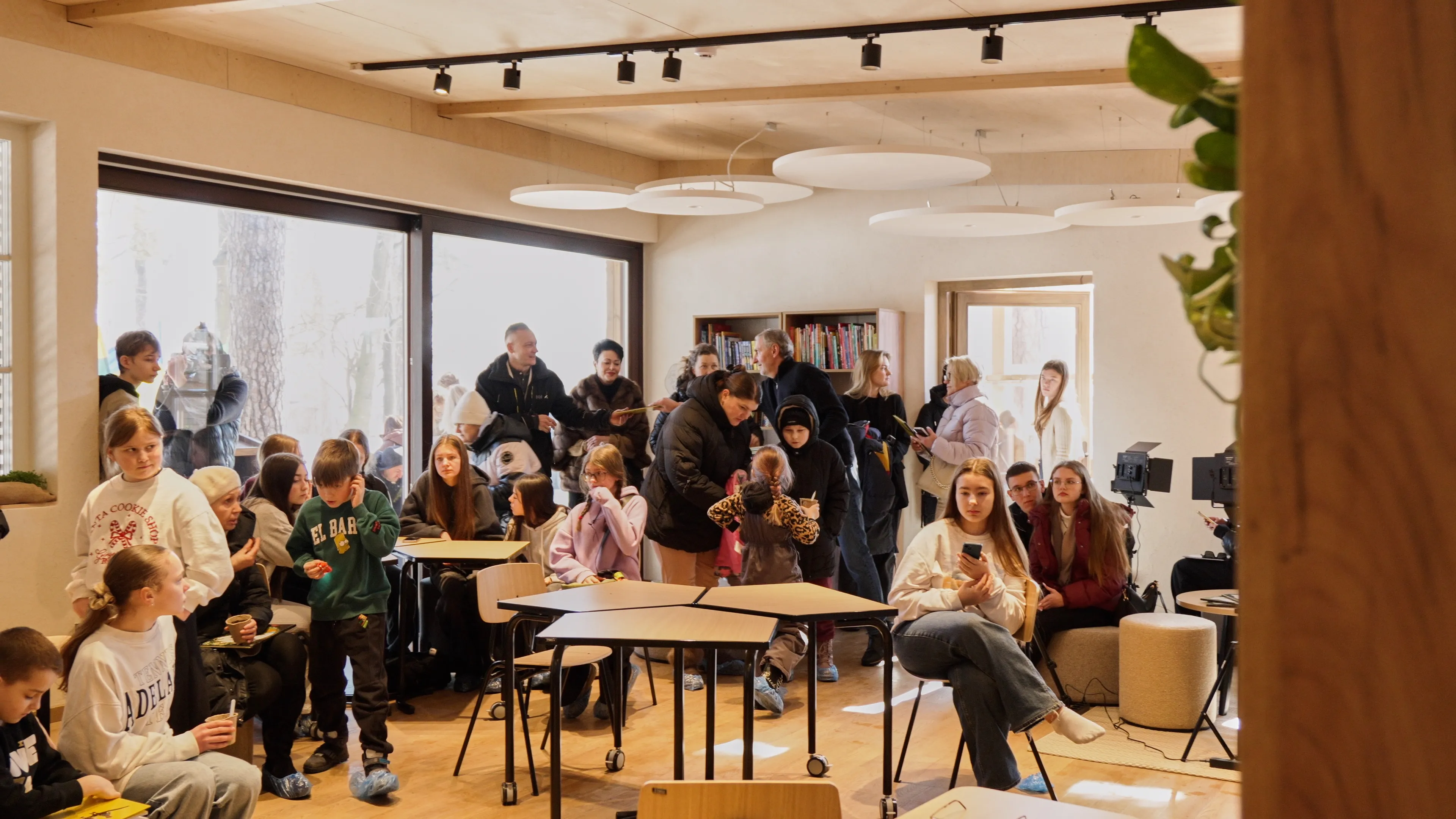
The classroom library is a vibrant knowledge hub featuring more than 2,000 carefully selected books that inspire curiosity, critical thinking, and a lifelong love of reading. The collection spans environmental education, science, literature, art, history, and personal development, offering resources tailored to different age groups and interests.

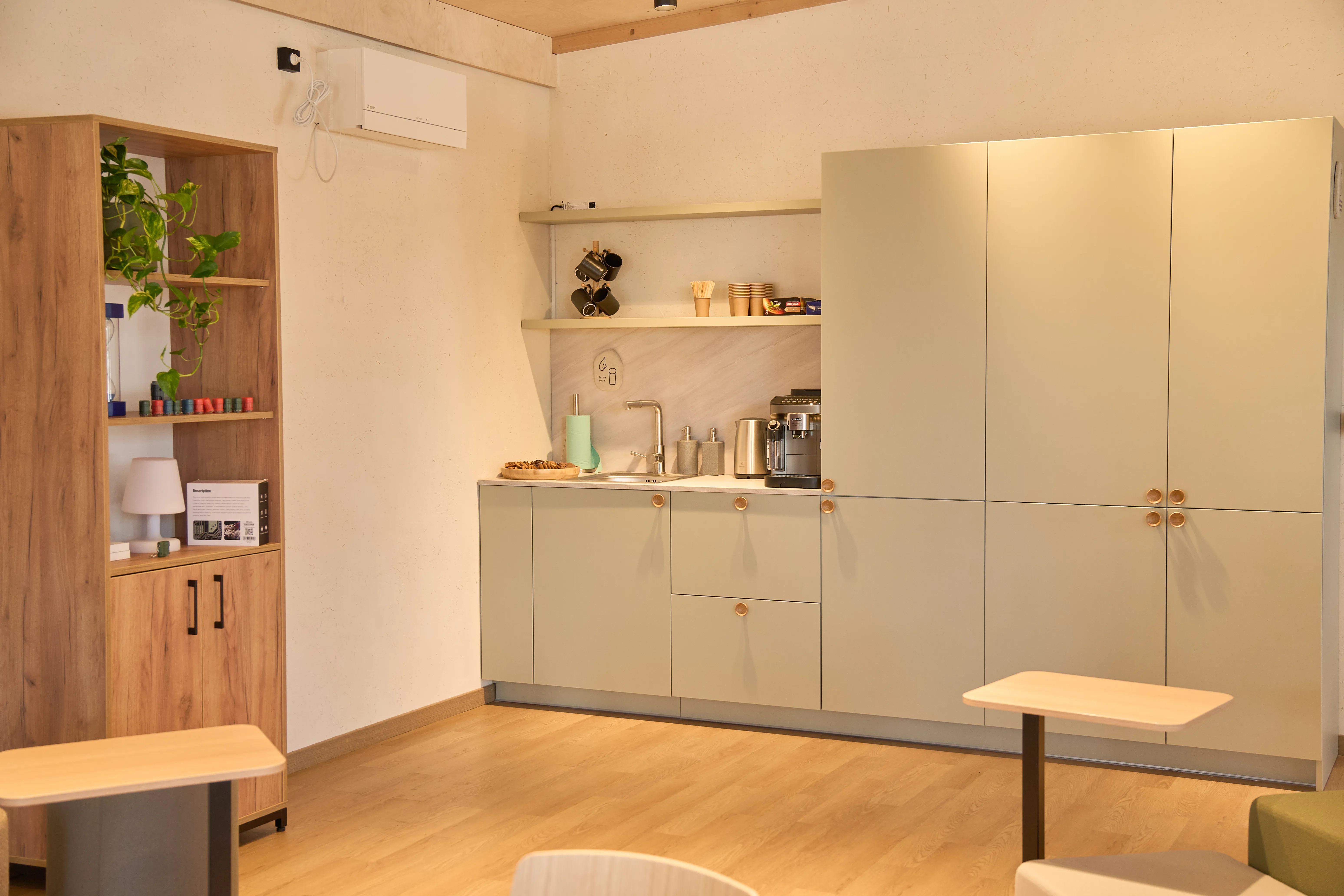
A compact kitchenette is thoughtfully integrated into the space to provide comfort and convenience for both educators and visitors. Equipped with functional cabinetry, a refrigerator, and essential amenities for preparing coffee and tea, it creates a welcoming corner for short breaks and informal conversations.
Bucha Forest Classroom increases biodiversity and environmental awareness, enhanced educational experiences, and stronger community engagement in sustainability efforts.
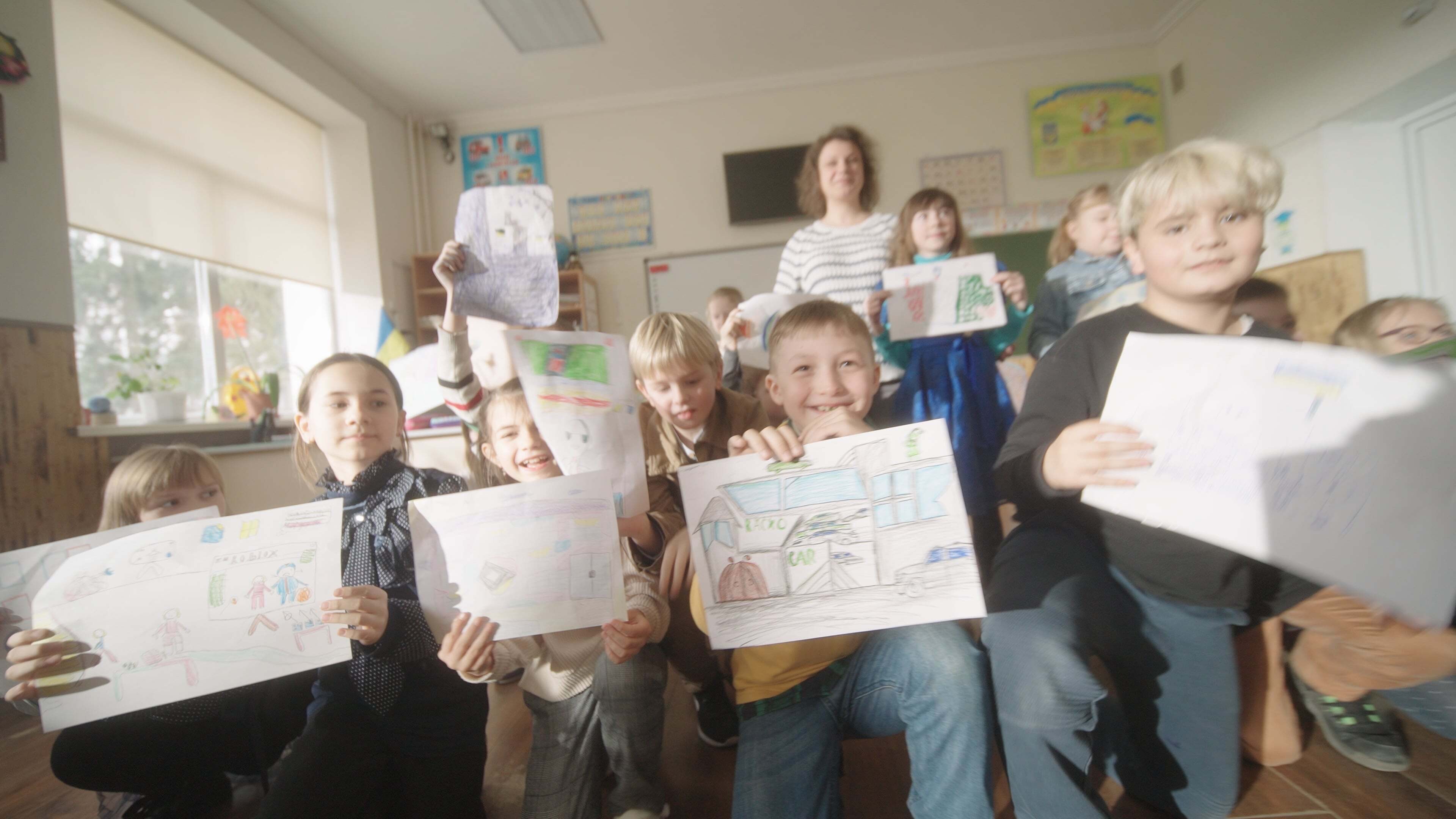
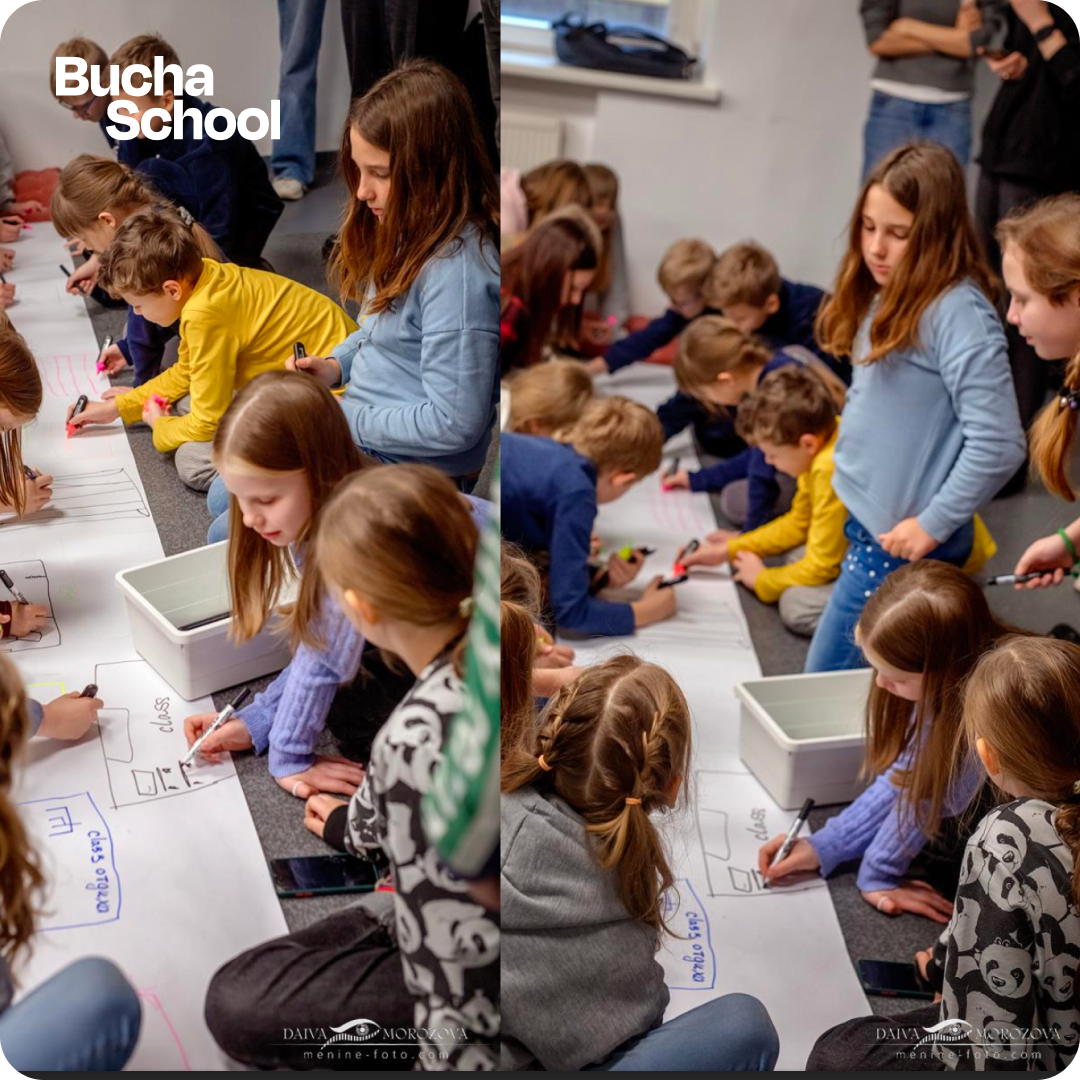
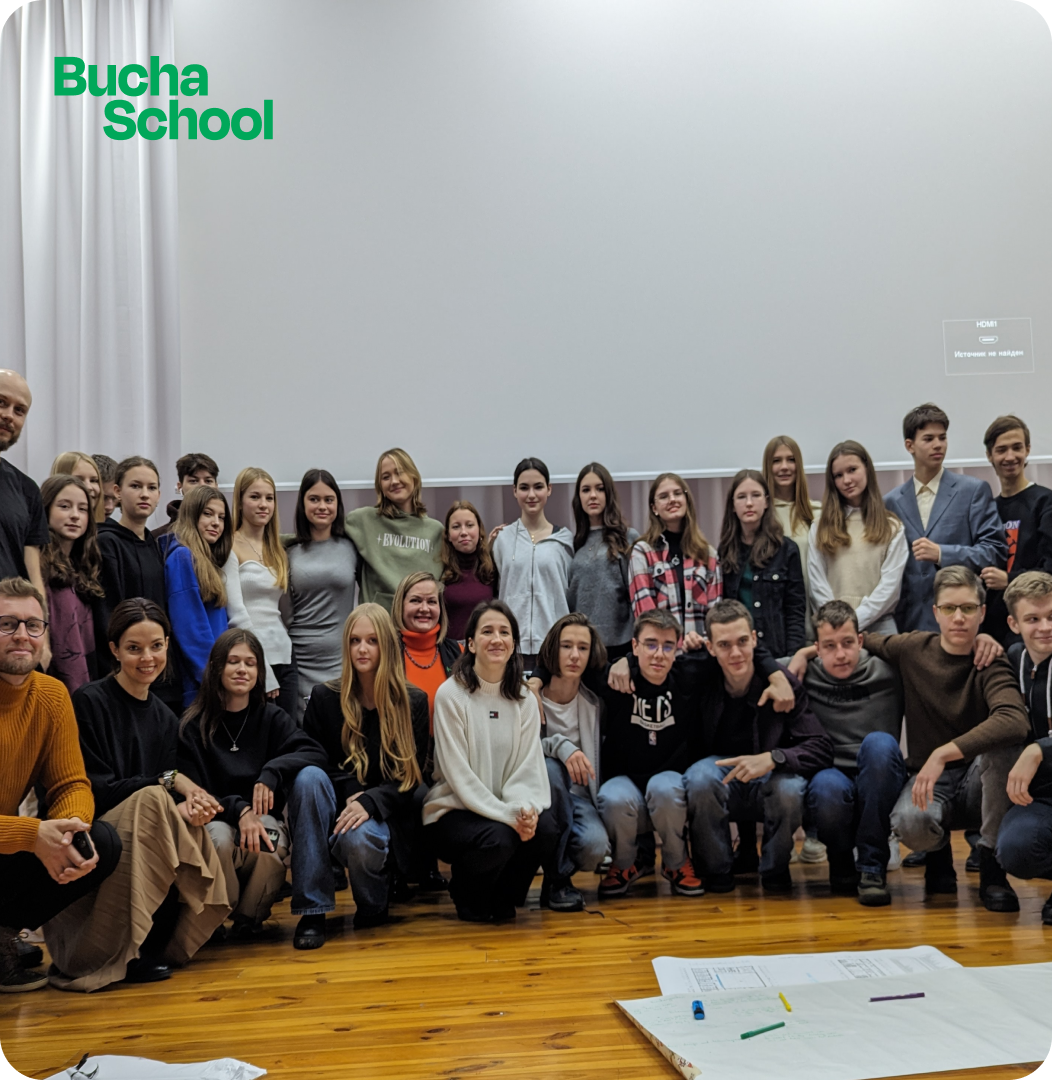
Creation process began with the co-design workshop held in Bucha, which brought together more than 40 participants and speakers. Inspired by the creativity, curiosity and determination of the Bucha’s children, the session led to the selection of the site and laid the foundations for the Forest Classroom concept.
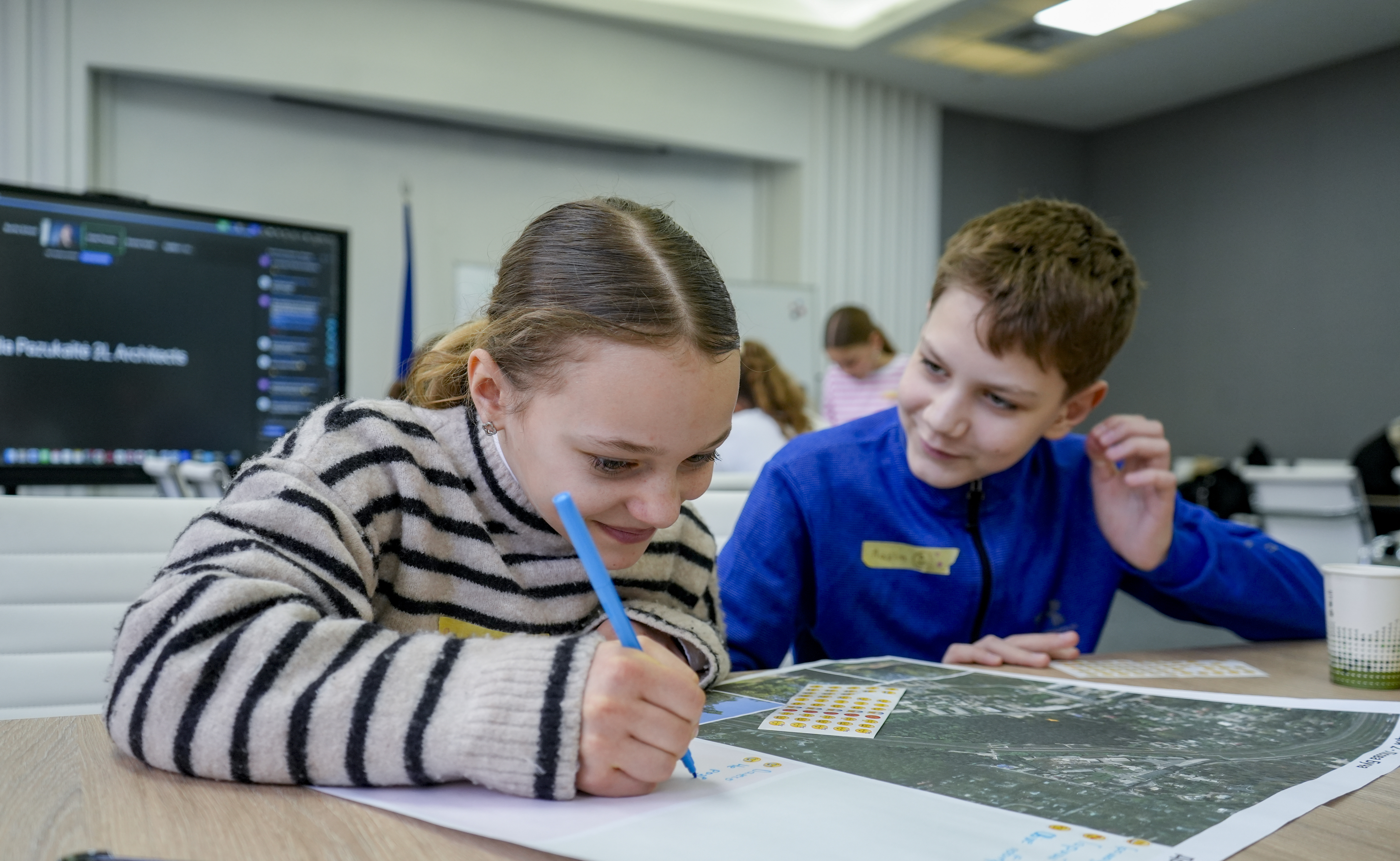
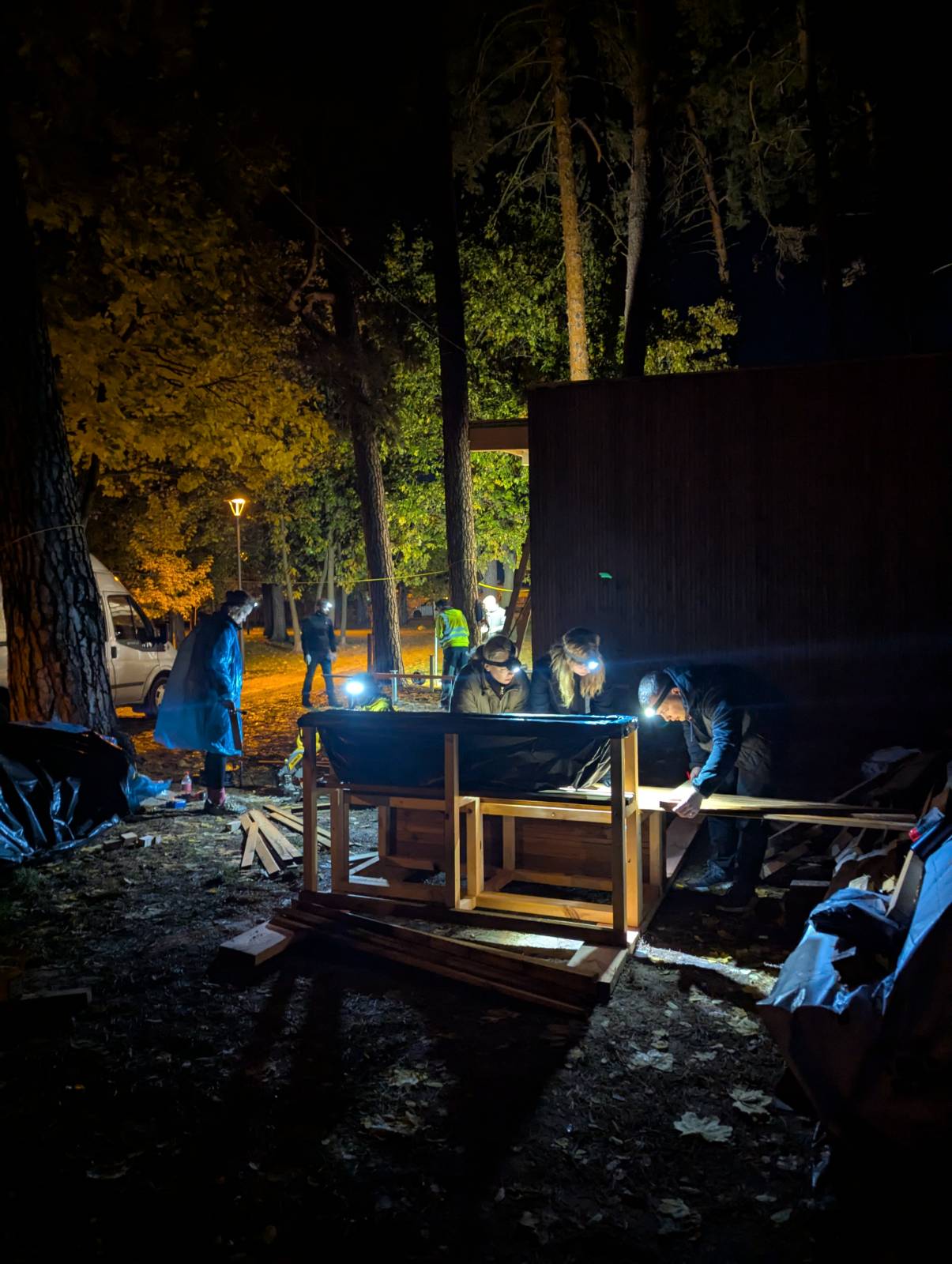
The workshop aimed to collectively assemble the glue-laminated timber beams and columns and straw wall panels. In parallel, participants worked on outdoor elements such as raised bed garden, birdhouses, bug hotels, using thermowood. Meanwhile, the youngest participants created
postcards for project supporters. Over one hundred people contributed to the creation of the classroom during the weekend.

International volunteers and Bucha community members gathered for an intensive three-day programme dedicated to completing the final construction works and preparing the classroom for opening. After the last tasks were completed, the classroom, greenhouse and the garden was opened for the Bucha community use.

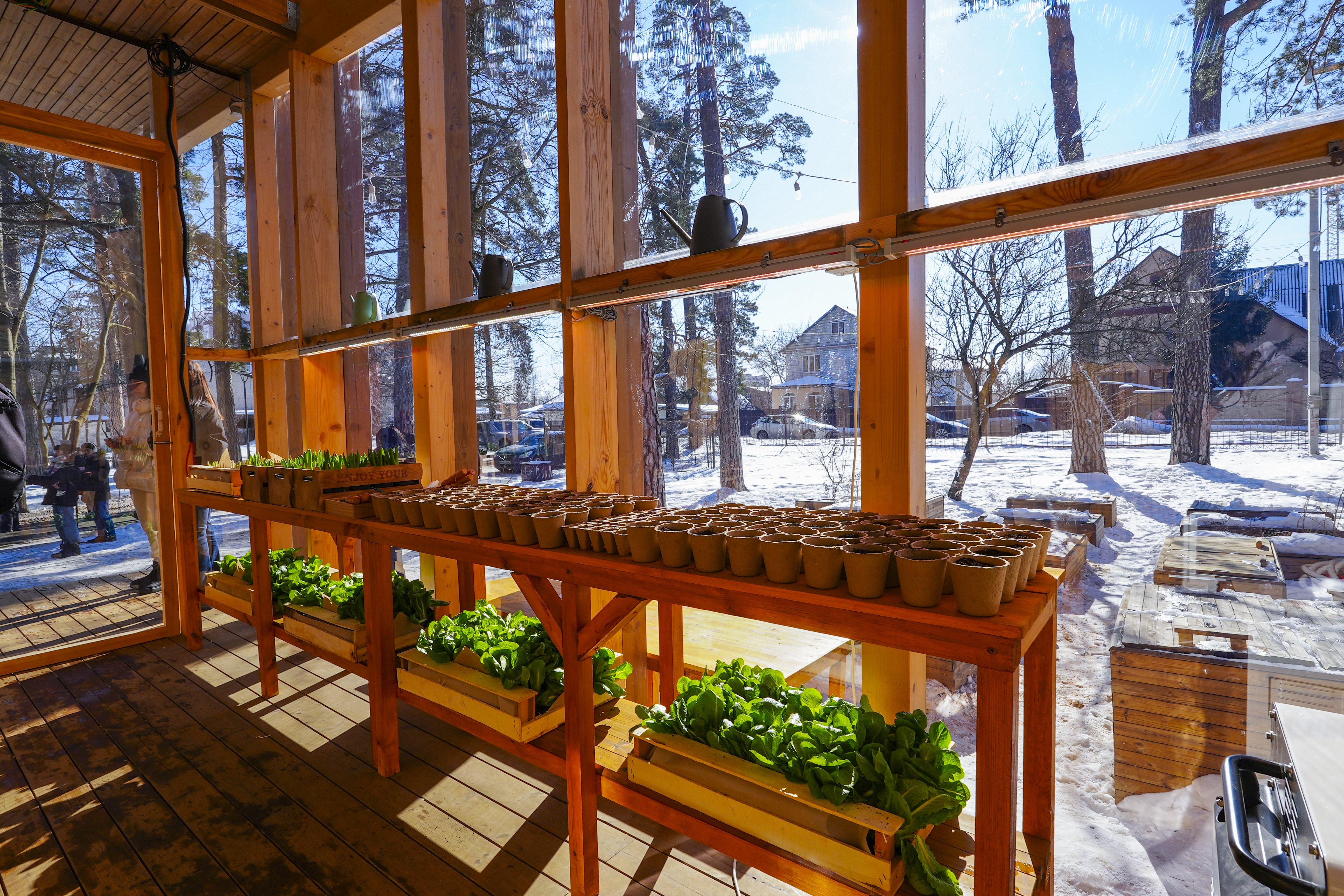
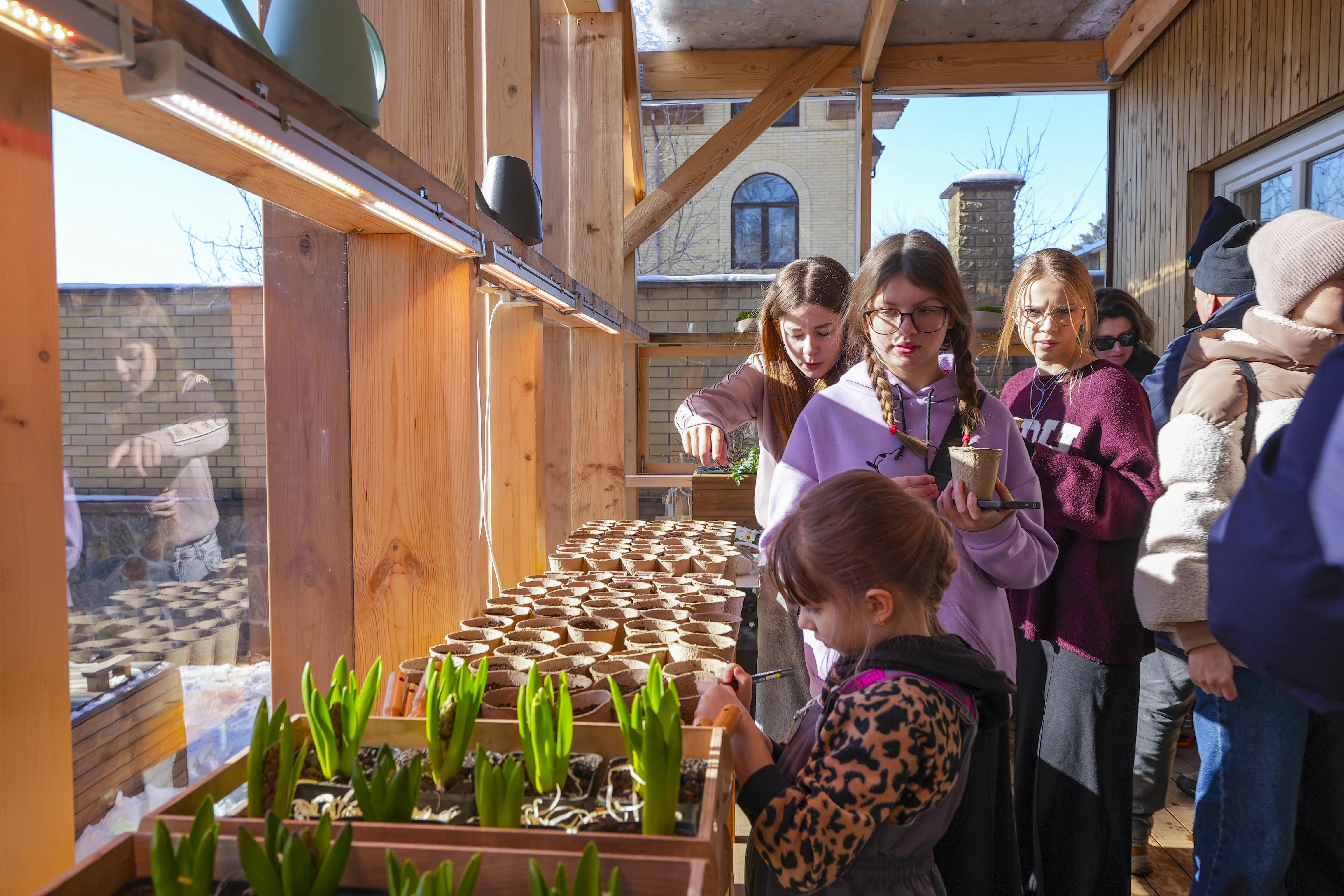
In February, 2026 volunteers and Bucha community gathered together for a sustainability podcast recording, open biology lesson using a wide variety of microscopes as well as putting the seeds into the pots for the spring season.
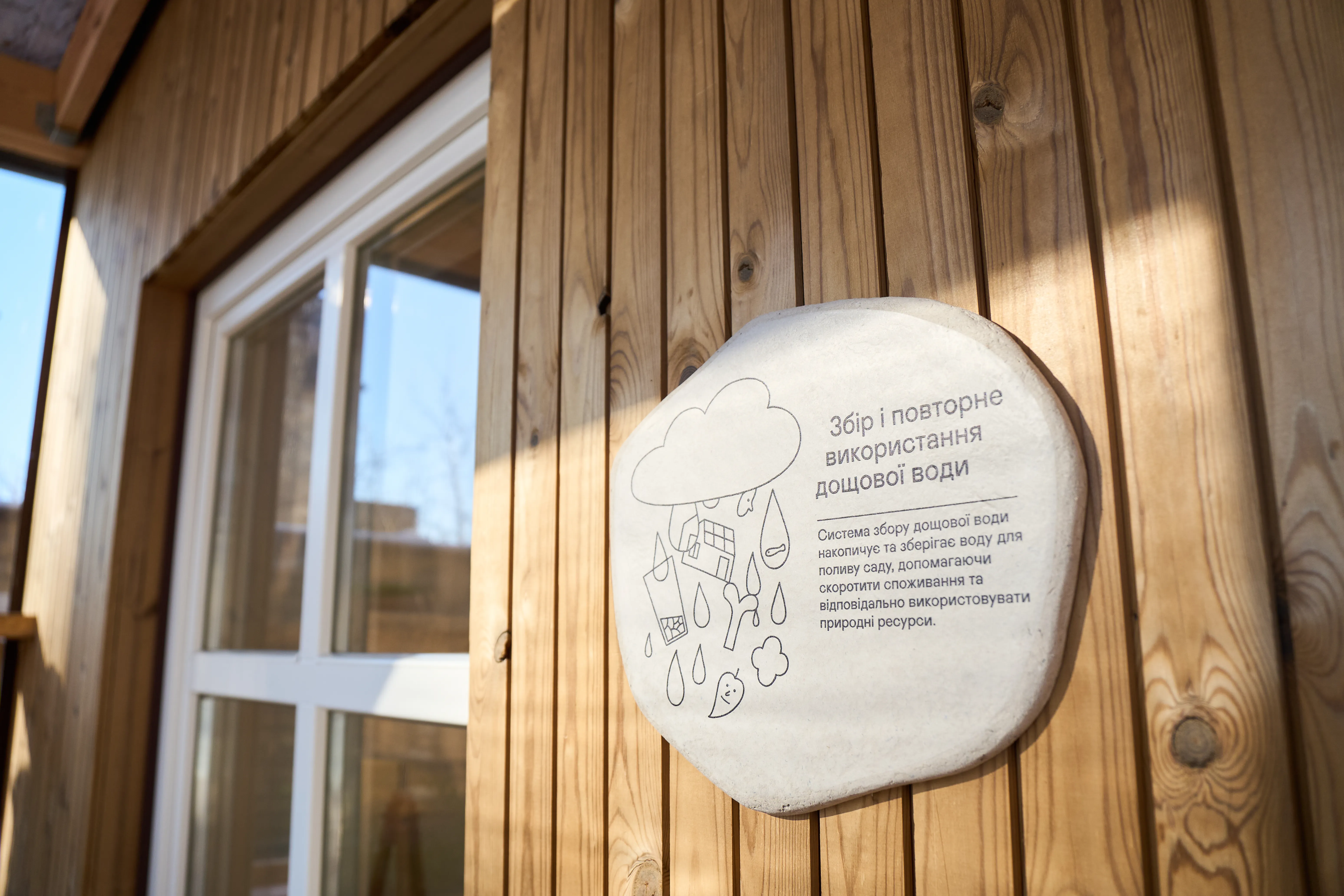
The classroom was created using, glue-lamintaed timber frame structure, thermowood and innovative straw panels for construction, ensuring a low-carbon, energy-efficient, and healthy environment. The classroom is powered with 5.2kW solar panels which powers the classroom along with the 5kW battery. Rainwater collection systems is integrated with the storage capacity and greenhouse watering system.
Your donation
can contribute to Bucha Forest Classroom!
The project is co-funded by European Institute of Innovation and Technology, a body of the European Union, under the New European Bauhaus initiative.
DONATE